50 Years Ago This Month: The Pinball and Arcade Industry in October 1976
By knapparcade
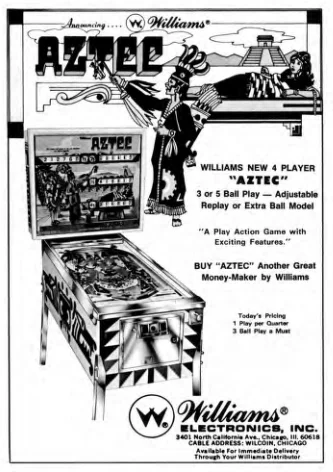
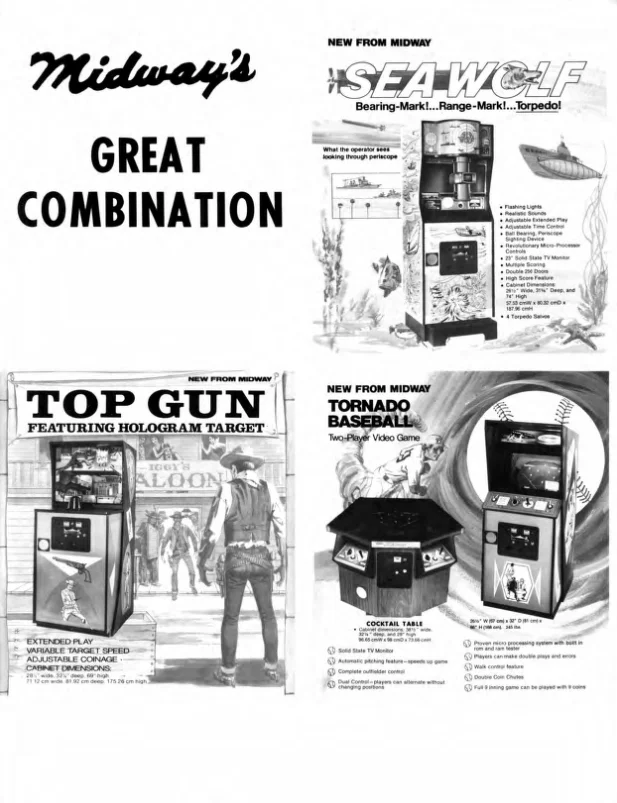
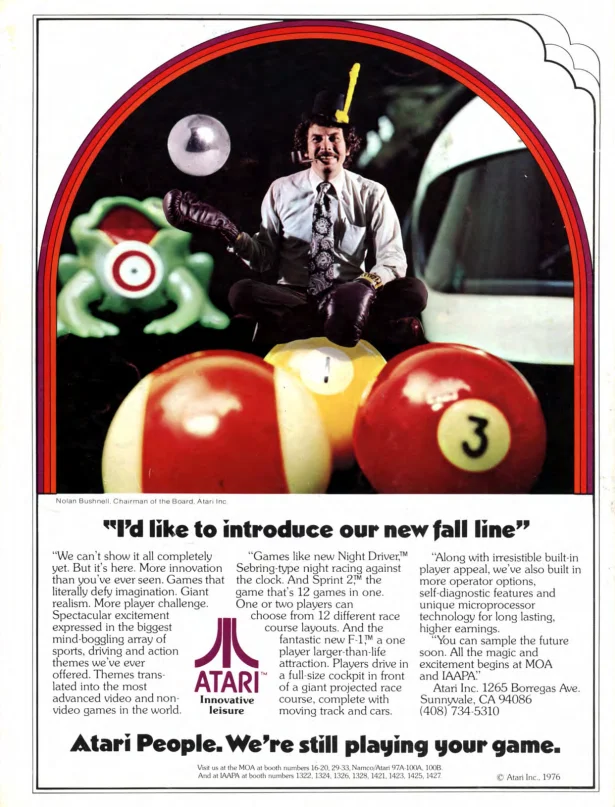
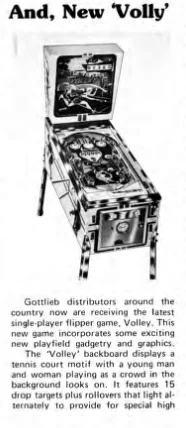
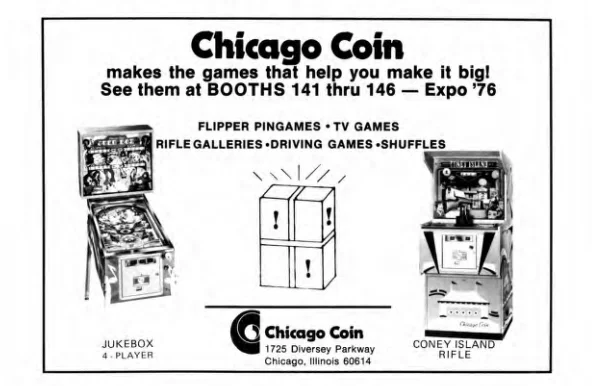
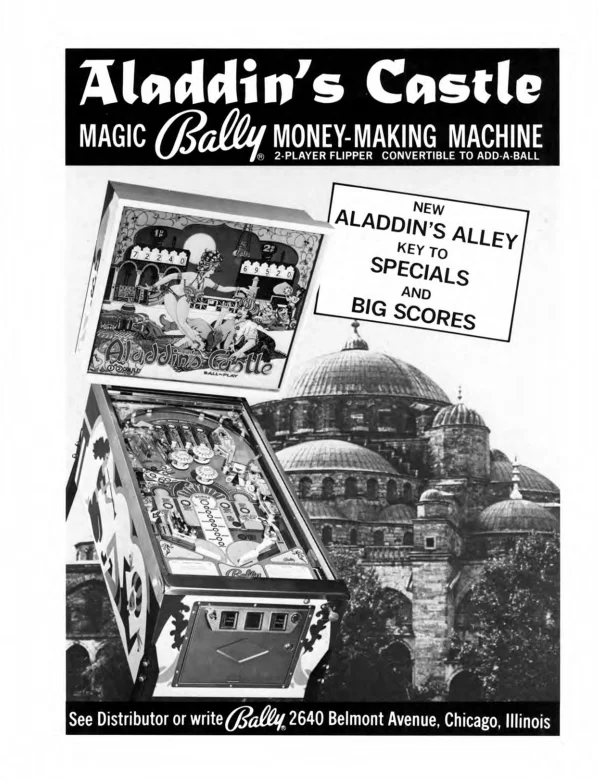
Last month's two articles about arcade history went over pretty well, so I have decided to continue it in October...and dig even further back into my old industry magazines to the 1970s. Half a century ago this month, October 1976, was a very consequential month for the coin-op industry. The October 30, 1976 issue of RePlay magazine — then barely into its second year — captured an industry changing in real time. The biggest stories of the month were a Hollywood conglomerate buying Atari and a new federal law rewriting the economics of the jukebox. Ford signs the Copyright Act, ending the jukebox exemption The month's biggest structural news came from Washington. On Tuesday, October 19, President Ford signed the long-fought revision of the 1909 Copyright Law, eliminating what the trade called the "jukebox royalty exemption." After more than three decades of argument over whether a record played on a jukebox counts as a "performance" owed to songwriters and publishers, the answer was now yes. Per RePlay's reporting from Music Operators of America attorney Nick Allen, the terms: beginning January 1, 1978, operators would have to license every music machine with the Copyright Office at a flat $8.00 per box, per year. A five-member Copyright Tribunal would set future rate reviews (the first in 1980, then every ten years) and divide the collected fees among performance societies like ASCAP and BMI. Penalties for an unlicensed jukebox could run as high as $10,000 and a year in jail. The law also nudged the mechanical royalty up to 2¾ cents a side. For an industry the public still called "the jukebox business," it was the end of an era. Warner buys Atari If the copyright law reshaped the music side, the month's defining company story reshaped the games side. Warner Communications completed its purchase of 100% of Atari's common and preferred stock — for cash and debt, at a price of about $28 million — on October 4. In the fiscal year ended May 29, 1976, Atari had posted revenues of roughly $39 million and net income of about $3.5 million; for scale, Warner's own operating revenues ran about $720 million for its most recent year, making Atari a small but fast-rising piece of a media giant. What did Warner think it was buying? RePlay put the question to Warner executive vice president Manny Gerard at the October 15 grand opening of Atari's new Sunnyvale headquarters — a 275,000-square-foot, six-building corporate campus that ranked among the largest facilities in the games business, backed by a separate 70,000-square-foot plant in Santa Clara. Gerard said Warner had "bought the totality of Atari" — not its home-products division or its coin-op division alone — prizing the company's management and engineering talent and an industry he believed had only begun to show its potential; consumer and coin-op, he argued, fed each other. The much-discussed "cross-fertilization" with Warner's film, television, cable, record (Warner Bros., Elektra/Asylum, and Atlantic) and publishing arms, he cautioned, would take at least a year to study, and wasn't the reason for the deal. Crucially for the trade, Atari would stay Atari: all key executives from vice president up signed long-term contracts, and the company would run autonomously under its own people. Nolan Bushnell — who presided over some 1,000 guests at the Sunnyvale open house — was already predicting that home Pong sales would double over the prior Christmas, and promised "very heavy machines" at MOA, kept under wraps until showtime. Asked what the Warner connection would mean over the long haul, his answer was characteristically unmodest: "Take Atari as big as it is and times it by two." What happened next: The bet paid off spectacularly — for a while. Warner poured a reported $100 million or so into Atari and brought the Video Computer System (the Atari 2600) to market in 1977, touching off a home-console boom. Bushnell himself was pushed out in 1978, but under Warner-installed management the company soared: by 1982, Atari dominated home video games, employed around 10,000 people, and threw off a large share of Warner's profits — by various accounts from a third to well over half — on peak sales reported near $2 billion. Then it overreached. A glut of cartridges, a rushed and widely panned E.T. game, and an over-ordered Pac-Man port collided with a saturating market, and the North American video game crash of 1983 hit Atari hardest of all: the division lost more than $500 million that year, and Warner's stock tumbled on the news. In 1984, Warner broke the company up — selling the consumer and computer business to former Commodore chief Jack Tramiel and keeping the coin-op arcade operation as Atari Games. Atari's Cinderella story of rising from its first commercial Pong machine into a massive acquisition by a conglomerate in four short years became, within a decade, both one of the great business successes of its era and the defining casualty of the crash that ended it. Pinball at a turning point 1976 was essentially the moment that solid-state electronics arrived in pinball. A technical columnist (Kurz-Kasch's Jim Sneed) reported three solid-state pins already on location, six more in the labs, and another three about ready for the street — a wave driven by simple economics, since a single integrated circuit could replace six relays at a fraction of the cost. At the Music Operators of America show (soon to change its name to AMOA), the major manufacturers — Bally, Williams, D. Gottlieb, and Chicago Dynamic Industries aka Chicago Coin — were all set to show off new pinball machines, with Atari, Meadows, and possibly Sega of America expected to debut their first pins. The electromechanical era wasn't finished, though, and the month's new games showed it. Gottlieb showed two: Surf Champ, a four-player with a surfer-themed backglass, five drop targets, five star rollovers, and a special kick-out hole worth 1,000 points per star hit; and Volley, a single-player with a tennis-court motif and 15 drop targets. Williams rolled out Aztec, a four-player offered in replay or extra-ball versions and priced at the increasingly standard one play per quarter. And Bally's two reigning "superstar flippers," Wizard and Captain Fantastic, were earning well enough that operators were wiring in cassette units to play music during the game or when a player cleared Captain Fantastic's 100,000-point "Over the Top" feature — a bit of homebrew ingenuity documented in Bally's own field-service column. Bally also used the Captain Fantastic production run to make converting games to quarter play easier, a sign of where pricing was heading. That pinball still mattered showed up in the numbers. In a RePlay operator poll of the most profitable games — a list topped by Midway's Sea Wolf and Gun Fight — two Bally pins cracked the top ten: Wizard at number three and Captain Fantastic at number nine. And by average weekly arcade gross, pins pulled about $38, essentially even with video games at $42 and ahead of pool tables and rifle games — not bad for a format some were already writing off against the video boom.