New Interview Details How Big Bang Bar Was Almost Remade a Second Time
By knapparcade
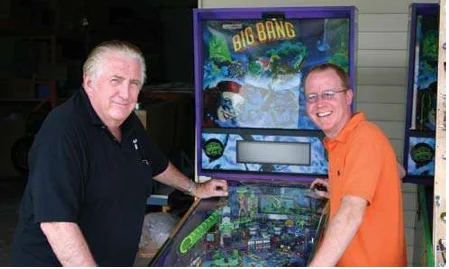
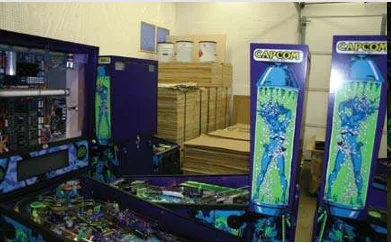
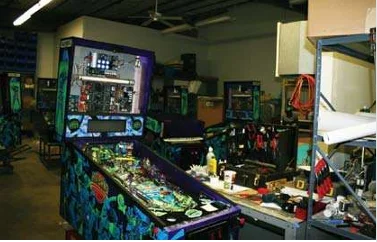
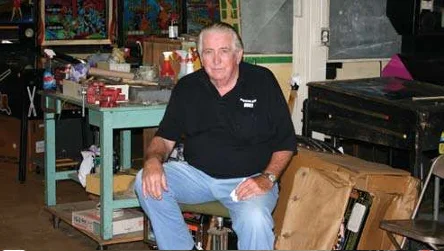
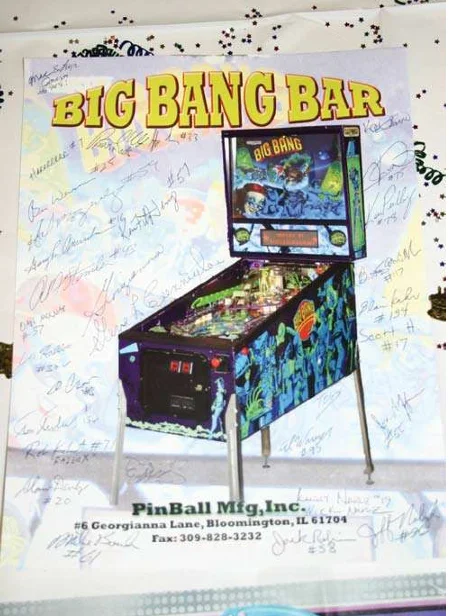
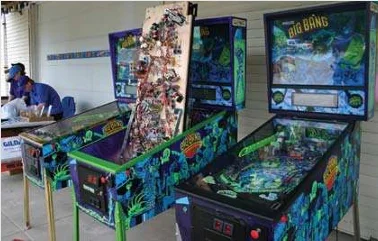
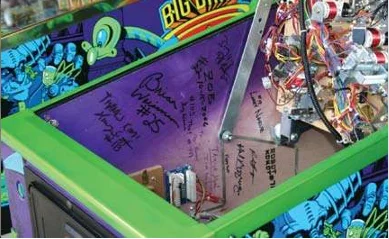
I've written about the fascinating tale of Big Bang Bar Pinball here before, but I now have new pictures of the Illinois Pinball version of the game and new details on the recent attempt to remake it again courtesy of a brand new Dutch Pinball Museum interview with Melvin Williams. For those of you who aren't familiar with the backstory of this game, Capcom designed it in 1996, built 14 samples and then left the pinball business before it could reach production. A decade later, a collector and entrepreneur named Gene Cunningham founded Illinois Pinball and built 185 more Big Bang Bars from the ground up. More than 25 years after that, yet a designer tried to bring it back again. This history pulls together three sources. The first is Gene Cunningham’s seminar at Pinball Expo 2000, which I was able to find a recording of on the Internet Archive. The second is Rob Craig’s “What a Big Bang Bar!” in the July 2007 issue of GameRoom Magazine. The third is the aforementioned recent five-minute video interview with American Pinball’s new creative director. Capcom’s last game Capcom’s pinball division only put a handful of games into full production: Pinball Magic in 1995, followed by Airborne, Breakshot and Flipper Football in 1996. Big Bang Bar, a sci-fi bar game, was meant to be next. According to GameRoom, Capcom built only 14 samples before closing its pinball operation, so the game never got the chance to compete with Tales of the Arabian Nights or Scared Stiff on location. The 14 samples went to private owners, and some of them shared their machines with other players. Over the years Big Bang Bar gained a cult following both for its rarity and fans of its gameplay. The Williams connection In the recent “Five-Minute Secrets” interview, American Pinball’s creative director said Williams obtained the rights to Big Bang Bar around 1997 or 1998, as part of a legal dispute he connected to Theatre of Magic. He said Williams went further than most people know: - Williams was actively developing the game as a follow-up to Cactus Canyon. - The circuit boards were finished. - Dot-matrix code was in progress. - One or two prototypes may have been built. According to Melvin, Williams dropped Big Bang Bar project when it committed to Pinball 2000. Gene Cunningham buys the rights Williams announced it was leaving pinball in late 1999. About a year later, at Pinball Expo 2000, Gene Cunningham told the seminar audience he was finalizing a deal for the Williams pinball parts business through his company, Illinois Pinball. He had already bought Capcom’s pinball assets, including the intellectual property. “We have the rights to Big Bang Bar,” Cunningham said at the time. He said 33 people at the Allentown show had asked whether he would build it. His answer then was “probably not in the near future. We might someday down the road.” Over the next few years, Illinois Pinball learned to remanufacture parts for the most in-demand Williams and Bally games, including playfields, cabinet decals and backglasses for KISS and The Addams Family. GameRoom said that experience made a Big Bang Bar run possible. Setting up the run Ultimately Gene decided to build a run of the game. First he tracked down one of the 14 original samples and bought it for a whopping $19,000. He already had the original drawings and artwork for the game through his purchase of Capcom Pinball's assets. His production run of the game was limited by the Capcom CPU board. Only 185 existed, and remaking more of those complex boards wasn’t practical, so 185 became the maximum production run. Cunningham formed PinBall Mfg. Inc. to build the machines because as GameRoom reported, his agreement with WMS didn’t allow Illinois Pinball itself to manufacture complete games. Taking orders: In 2004, Cunningham took a BBB sample to pinball shows. At Pinball Expo, people lined up to play it for $1 a game, with the money going to charity. Buyers joined a list by paying a 50% deposit on the $4,500 price. Plenty of people at the time doubted that a full pinball machine could be built outside a traditional factory. Cunningham definitely did run into a lot of costly setbacks and delays during the build, including: - Vendors: Some cut corners or shorted inventory, and some missed the mark entirely. That included wiring harnesses and playfield toys. Cunningham insisted on OEM quality or better. - Playfield clearcoat: A mixing error in the clearcoat caused premature ball marks on the playfields. Every one had to be lightly sanded and re-coated with a hard clearcoat by a dedicated finisher. - Sub-assemblies: Some arrived broken or didn’t work. Success...Sort of European buyers got their machines first. In summer 2006, all exported machines shipped early to beat an import deadline on electronics containing lead, since the game’s circuit boards used lead solder. The rest of the buyers celebrated on June 2, 2007, when PinBall Mfg. held an open house at its complex at 6 Georgianna Lane in Bloomington. Buyers from around the country toured the manufacturing areas and Cunningham’s home collection before heading out with their machines. For buyers: Each machine cost $4,500. That was about $1,000 more than a new Stern at the time, which made some people hesitate. By mid-2007, spots on the buyer list were selling for more than double the original price, with finished machines bringing more than $9,000. For Cunningham: With prices fixed for buyers and the setbacks piling up, GameRoom reported the project ran about $300,000 over budget. Asked what his next full production would be, Cunningham shook his head and said there would be no more. He kept a personalized, gold-trimmed Big Bang Bar for his own collection. The Second Remake That Almost Happened In the “Five-Minute Secrets” interview, American Pinball’s creative director said Big Bang Bar was his first project. Around 2021 or 2022, while working with Pedretti Gaming, he started on a reimagined version based on what he found in the Williams files. His plans included: - Building a whitewood from the Williams design - Bringing back a ball lock on the left side, which he believes was cut for cost - Adding a fourth arrow insert on the left lane - Lighting the bar with neon-style EL panels - Restoring the pole dancer figure to its first-prototype version, using the original sculpt he owns He said the prototype was essentially finished and only needed boards, but “something happened” and the board work couldn’t be completed. He left the project and moved on to Alice’s Adventures in Wonderland. He added that it could still happen someday. I have embedded the new Melvin Williams interview about Big Bang Bar below as well as some amazing pictures of Gene Cunningham and his prototype Big Bang Bars from the Gameroom Magazine article.